January 14, 2026

Look into the void

on
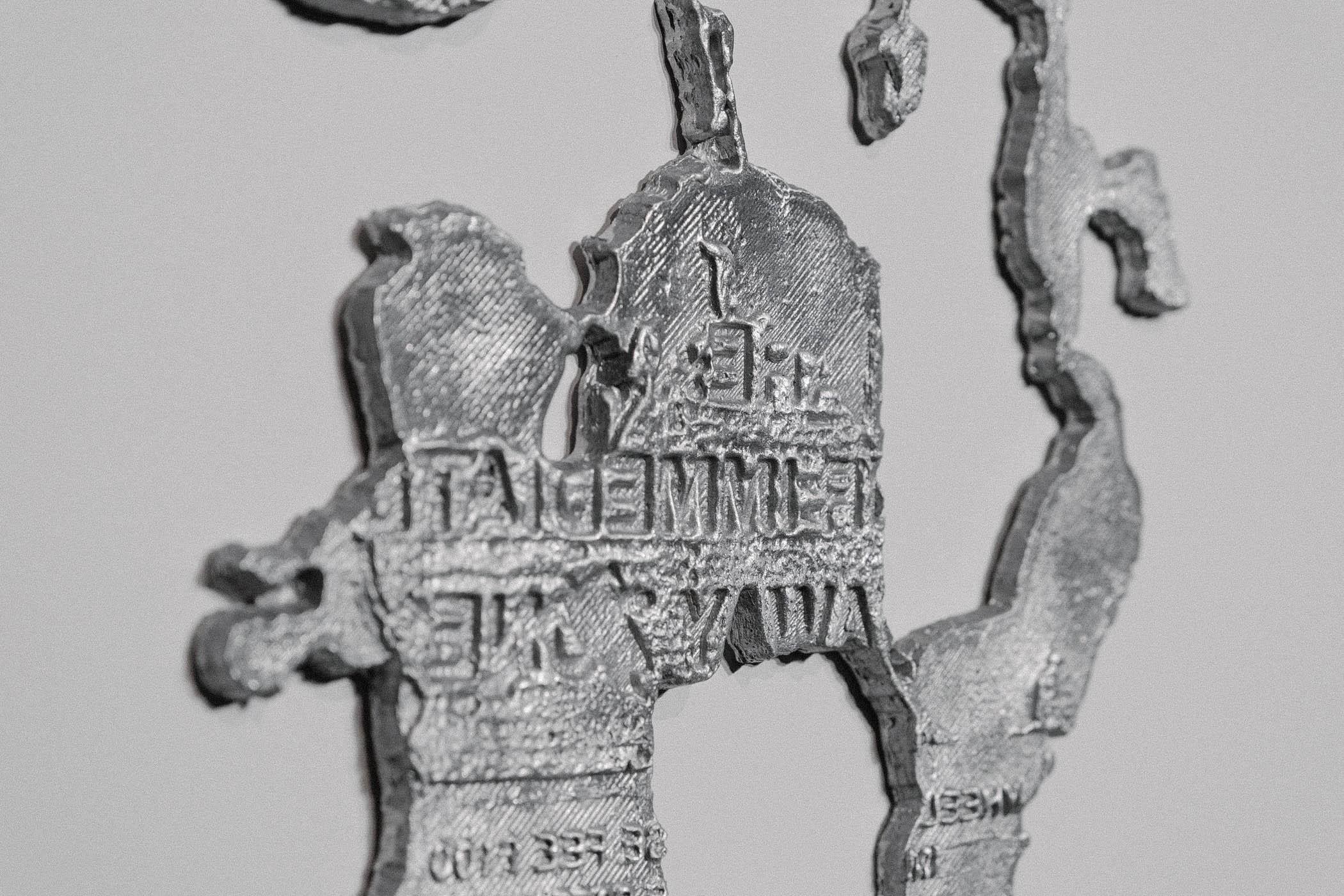
↑ The physical transfiguration of urban residues into permanent, cast metal.

Studio Nopqrst finds trueforms in aluminium

The colour of steel and aluminium, alongside concrete, forms the raw palette of our industrial existence. These tones define the hardware interface: the cold, matte, or brushed surfaces of the tools we touch every day.


In Trueform, Studio Nopqrst founder Hamlet Auyeung reflects on this relationship between material and urban society. Aluminium casts and virtual sculptures expose the ghosts of graphic design — the dried out, stubborn glue residues left behind when signs, notices, or posters are torn away. Cast in aluminium, these overlooked traces are granted a permanence they never possessed, becoming metal through a deliberate act of material transformation.
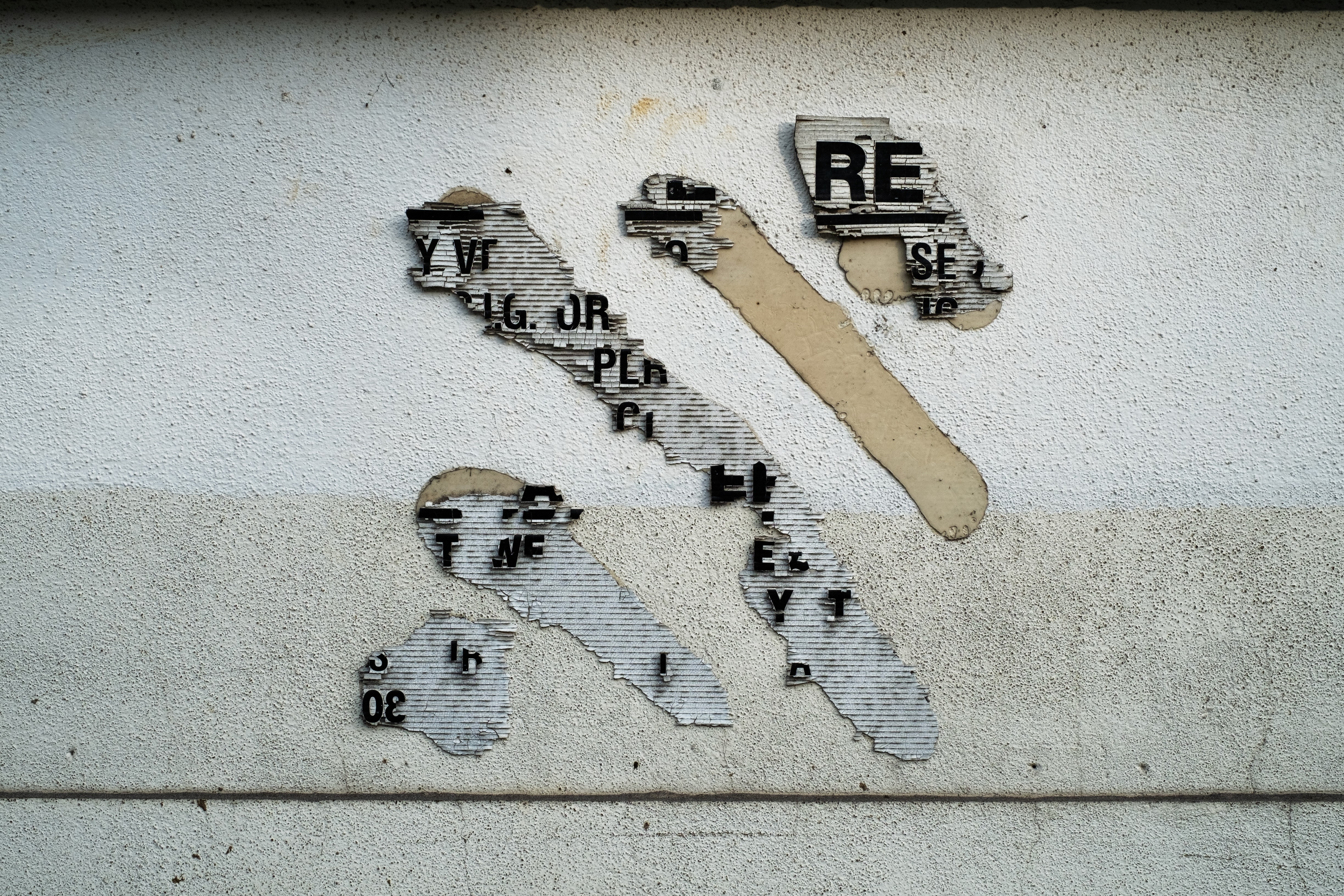

↑ The traces of glue serve as the primary source image and prompt for the Trueform series.


Void to form


Metal casting and generative AI share a common logic: transformation through energy. 


In traditional sand casting, the process begins by crafting a ‘void’—a negative space created by moulding an object into the earth. Molten metal, liquified by extreme heat, is poured into that void, and a solid object emerges as it cools. In AI, images emerge from latent space — a mathematical void navigated through computational force.


Both processes represent a high-energy transition from a state of raw, unformed potential into a fixed manifestation of some self-asserting belief.


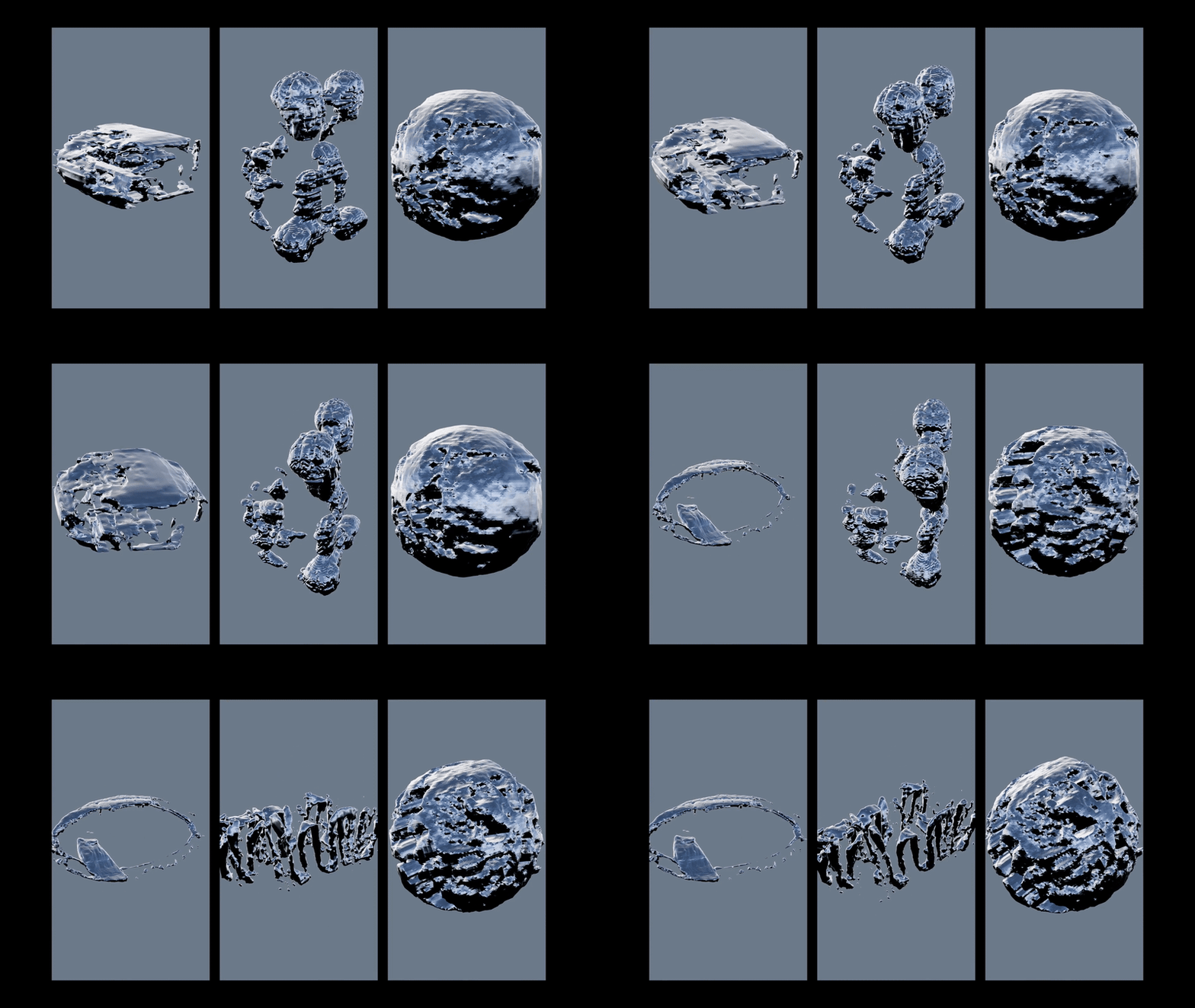
In Trueform, glue residues act as prompts for dual transformation. Physically, they become moulds for aluminium casts; digitally, they feed generative models that produce virtual sculptures. Aluminium’s ability to be endlessly melted and reformed mirrors this process. The work proposes a “liquid permanence,” where form is fixed yet always capable of revision, across both physical and virtual states.
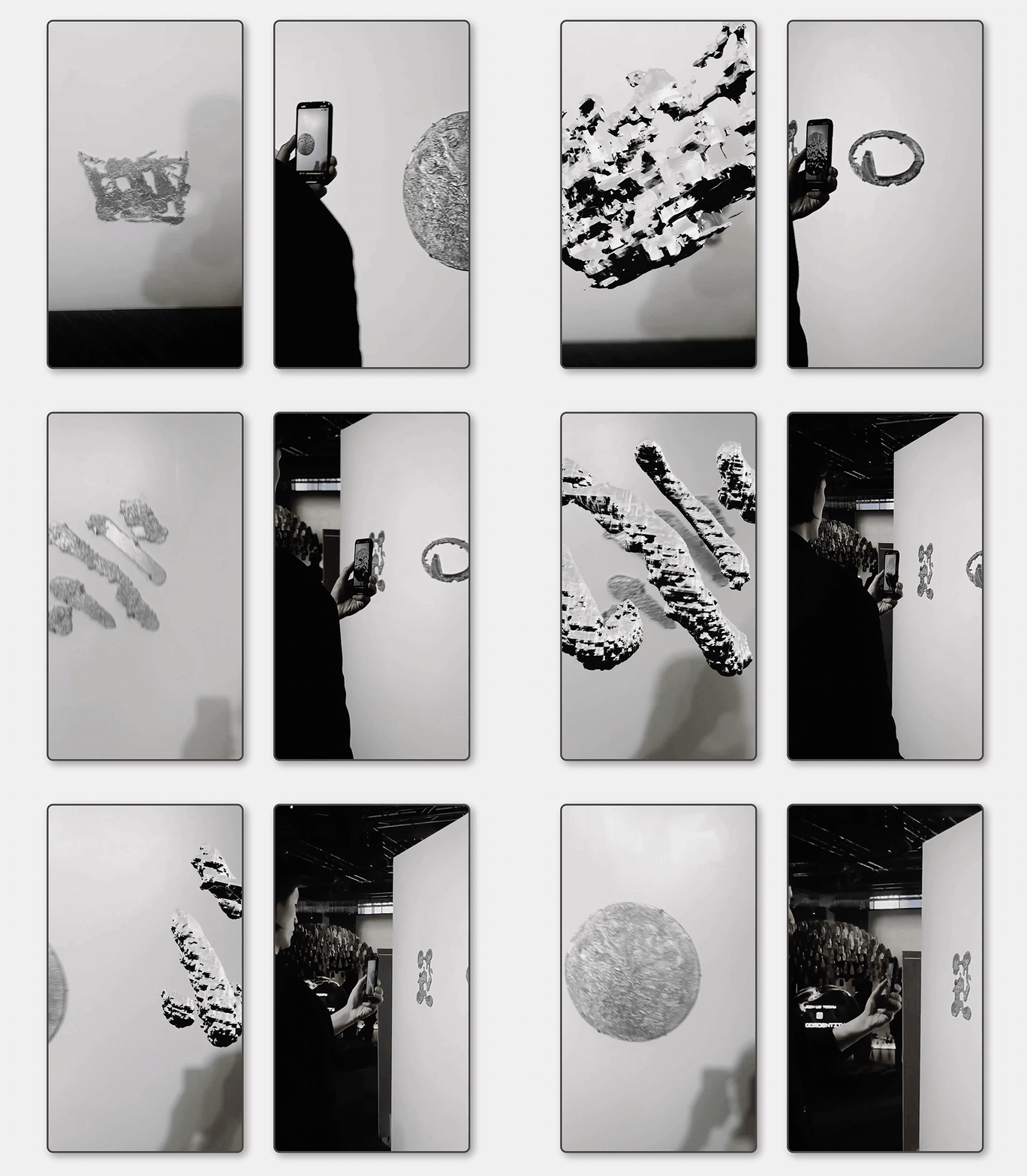

Trueform AR: A web-based experience using physical casts to trigger virtual sculptures generated through Stable Diffusion.


Cold resistance


Aluminium has become the default aesthetic of high technology. From satellites to laptops, its silver surface signifies precision, neutrality, and authority. This association emerged through modernist design movements that favoured reduction and modularity.


The Landi Chair (1938), designed by Hans Coray, utilised a single sheet of heat-hardened aluminium, perforated with 91 holes to reduce weight. It marked an early political use of aluminium. Embodying Swiss democratic values through lightness and transparency, its avant-garde form stood as a distinctly modern, democratic response to the heavy, monumental, and traditionalist aesthetic favoured by Nazi Germany. It proved that aluminium could be both ethereal and a site of ideological resistance.
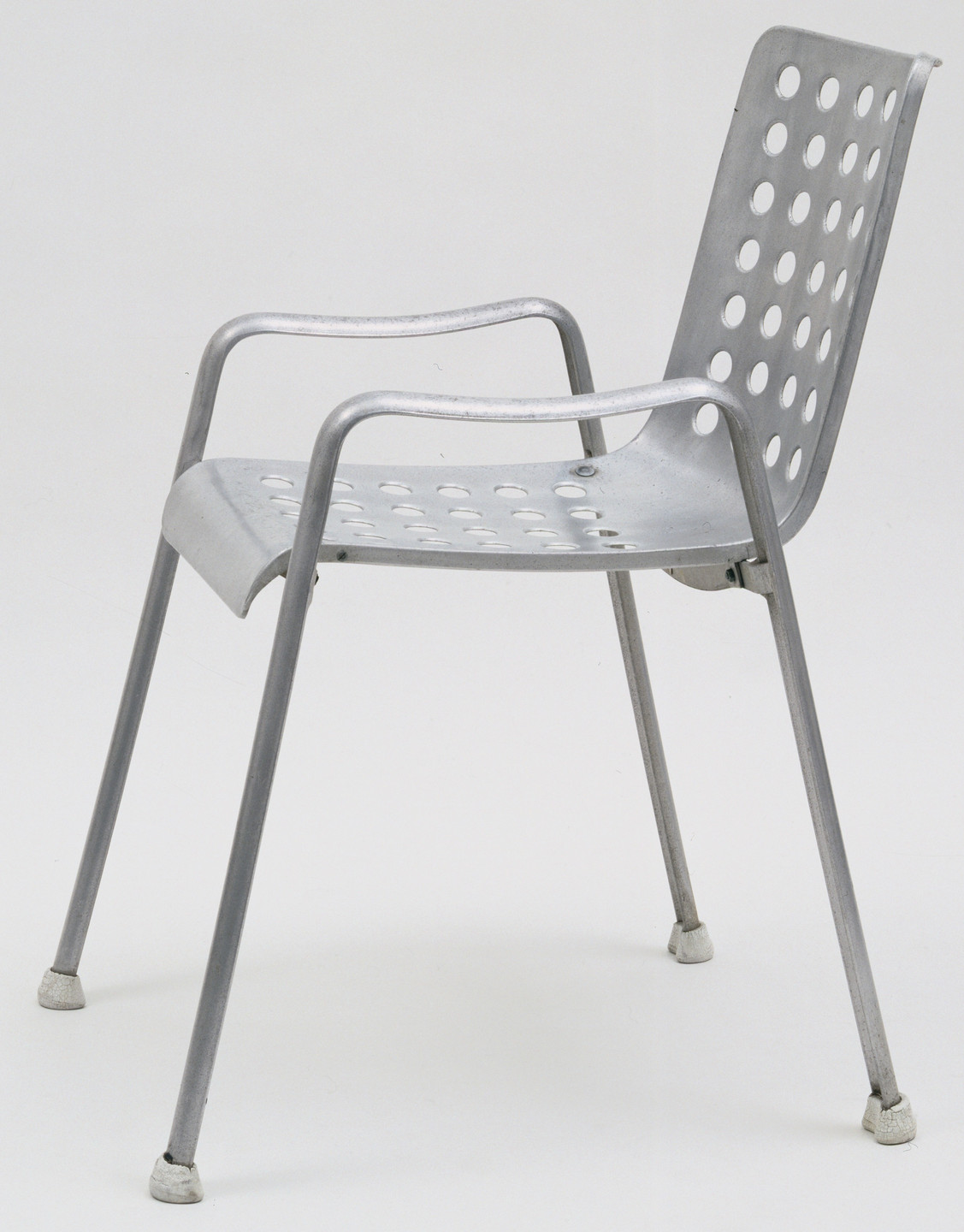

The Landi Chair (1938): A structural manifesto of "Spiritual National Defence," asserting Swiss democratic values against authoritarian traditionalism. Image from Moma.


This philosophy of material purity was later refined into a "Visual Language of Authority" by Dieter Rams, most notably in the World Receiver T1000 (1963). Rams and the Braun design team utilised anodised aluminium to establish a new "objective" aesthetic—one rooted in cold logic, transparency, and internationalism. By replacing the decorative, dark-wood cabinets of traditional radios with a laboratory-grade metallic fascia, the T1000 signalled that West Germany was now a rationalised, technocratic democracy.
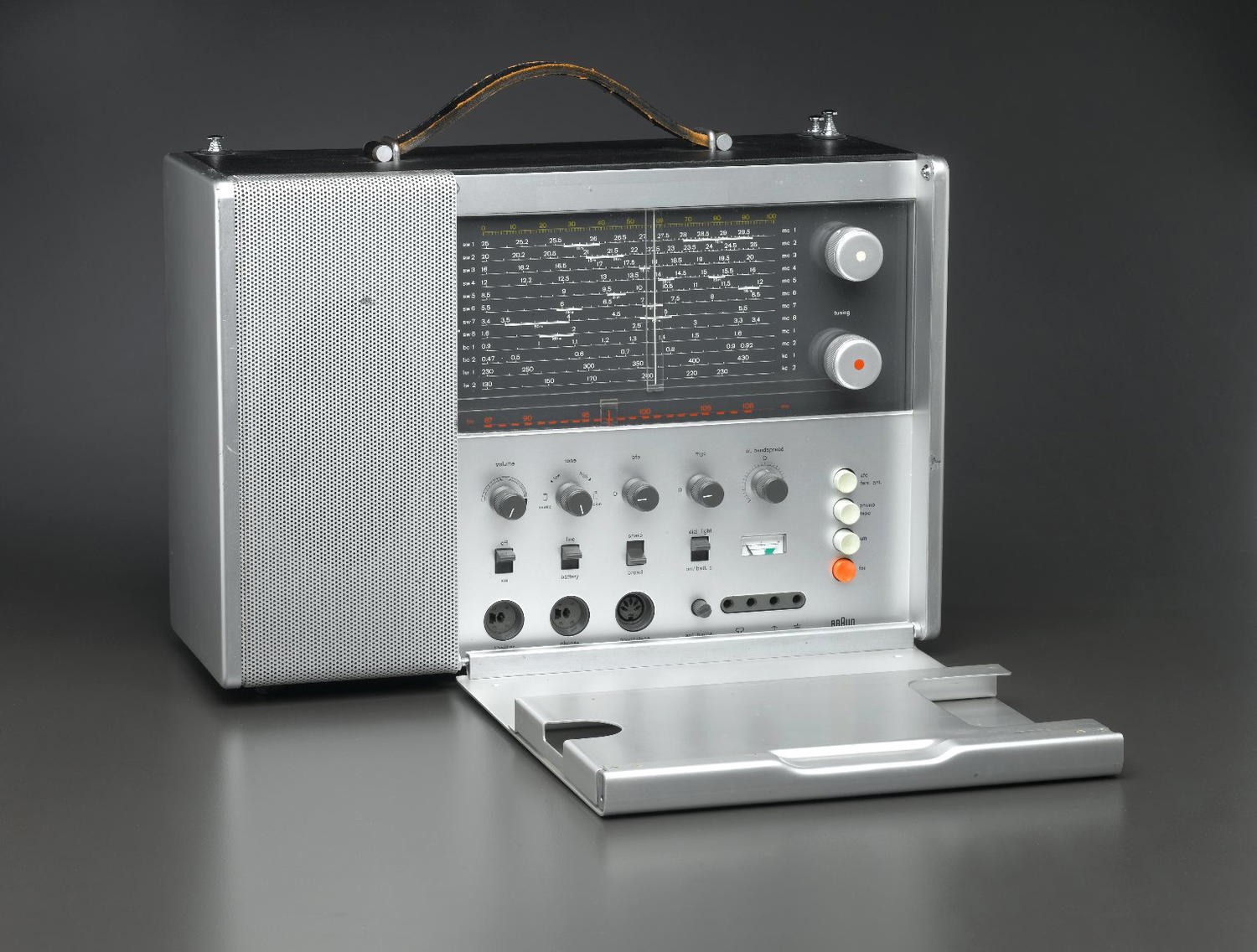

World Receiver T1000 (1963): An objective interface designed to rehabilitate German industrial identity through cold, internationalist logic. Image from Brooklyn Museum.


This trajectory finds its contemporary conclusion in the unibody construction of the modern laptop. The MacBook Pro is the direct heir to the T1000’s logic; its chassis is milled from a solid block of aluminium to achieve a level of structural integrity and thermal efficiency. Here, the material is no longer just a "casing" but the very spine of the machine. The aluminium interface has become the ultimate signifier of digital authority—a cold, immutable boundary containing the chaotic, invisible heat of the processors within.


Hot mess


The journey from bauxite ore to a cast sculpture is a narrative of global movement and immense energy. Refining ore into metal requires temperatures exceeding 950°C and a massive flow of electricity—a process so intensive it is often referred to as ‘solid electricity.’ This represents a state in which the energy is solidified and forever locked through chemical transformation.


This process is increasingly geopolitical. China dominates approximately 60% of global aluminium production, largely powered by coal-fired electricity and captive power plants.


In the age of AI, which consumes vast amounts of electricity to ‘train’ its models, the choice of aluminium as a conceptual mirror in Trueform becomes more pointed. Casting urban residues into metal exposes the hidden infrastructure behind seamless digital experiences, turning discarded traces into witnesses of the carbon-intensive digital economy.
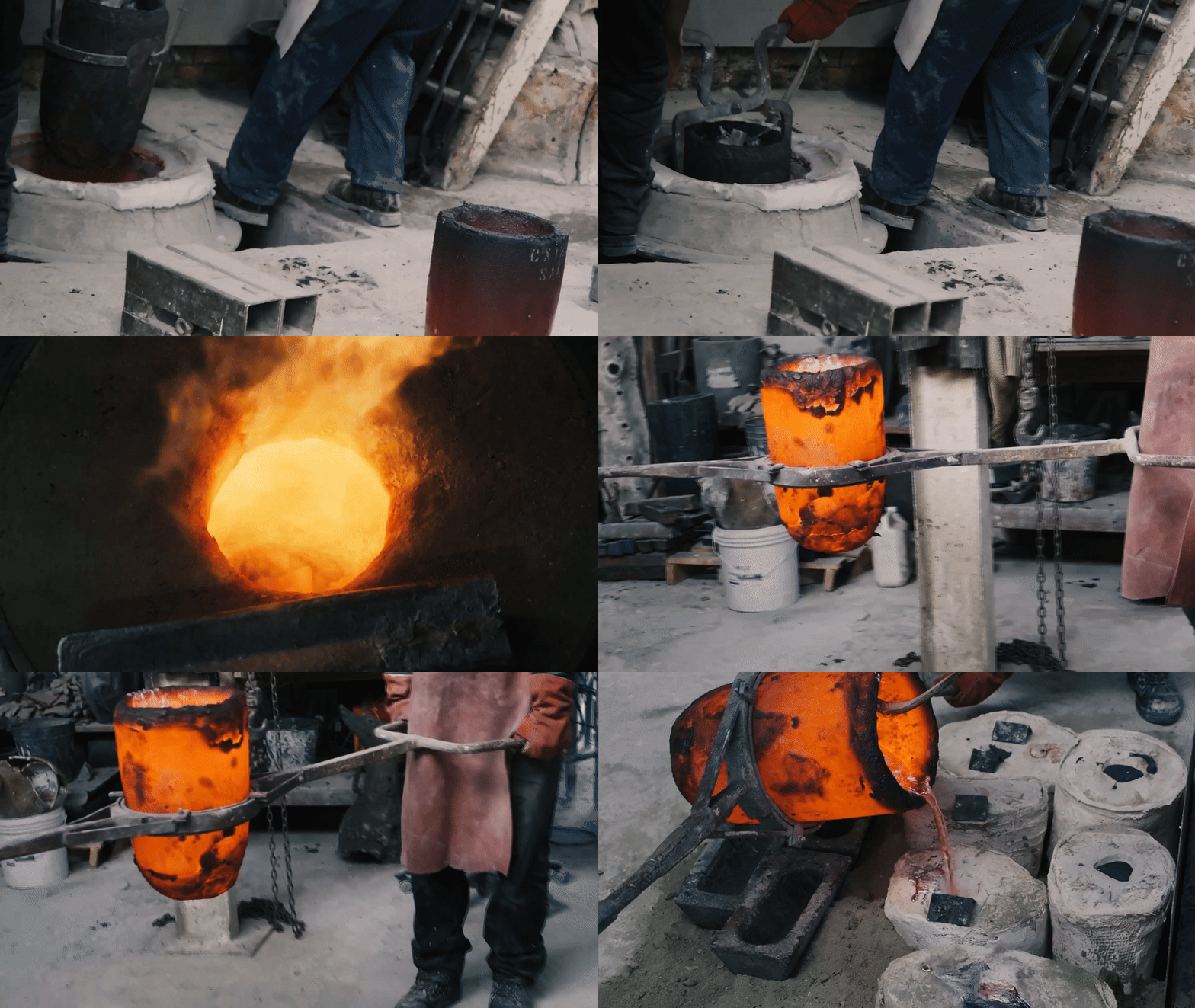

 An analogy exists between the craft of metal casting and the phenomenon of AI generative technology. Both are technologies of transformation driven by intense energy. 


Not so fast


Casting is a form of slow communication. Unlike digital images designed for rapid circulation and disposal, cast objects resist acceleration. By fixing glue traces—the remnants of commercial messaging—into aluminium, the work interrupts the cycle of consumption.


This gesture stands against ideologies that celebrate unchecked speed, such as Effective Accelerationism (e/acc), which advocates for the total submission to the machine’s velocity as a cosmic imperative.
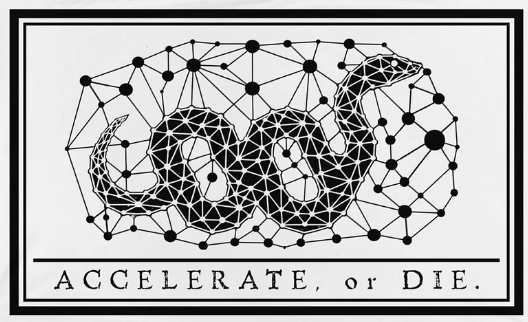

Effective Accelerationism Flag: A flag design representing the belief in an utopia delivered through the rapid, unhindered expansion of capitalised AI.


To cast these traces in aluminium is to reclaim a sense of freedom from this relentless acceleration. It is a transition from the passivity of receiving temporary signals to the autonomy of creating fixed realities. Using AI in this process is a way to harness the speed of the machine to enhance the depth of the physical result, anchoring digital potential into a material reality that refuses to evaporate into a stream of infinite expansion.

off
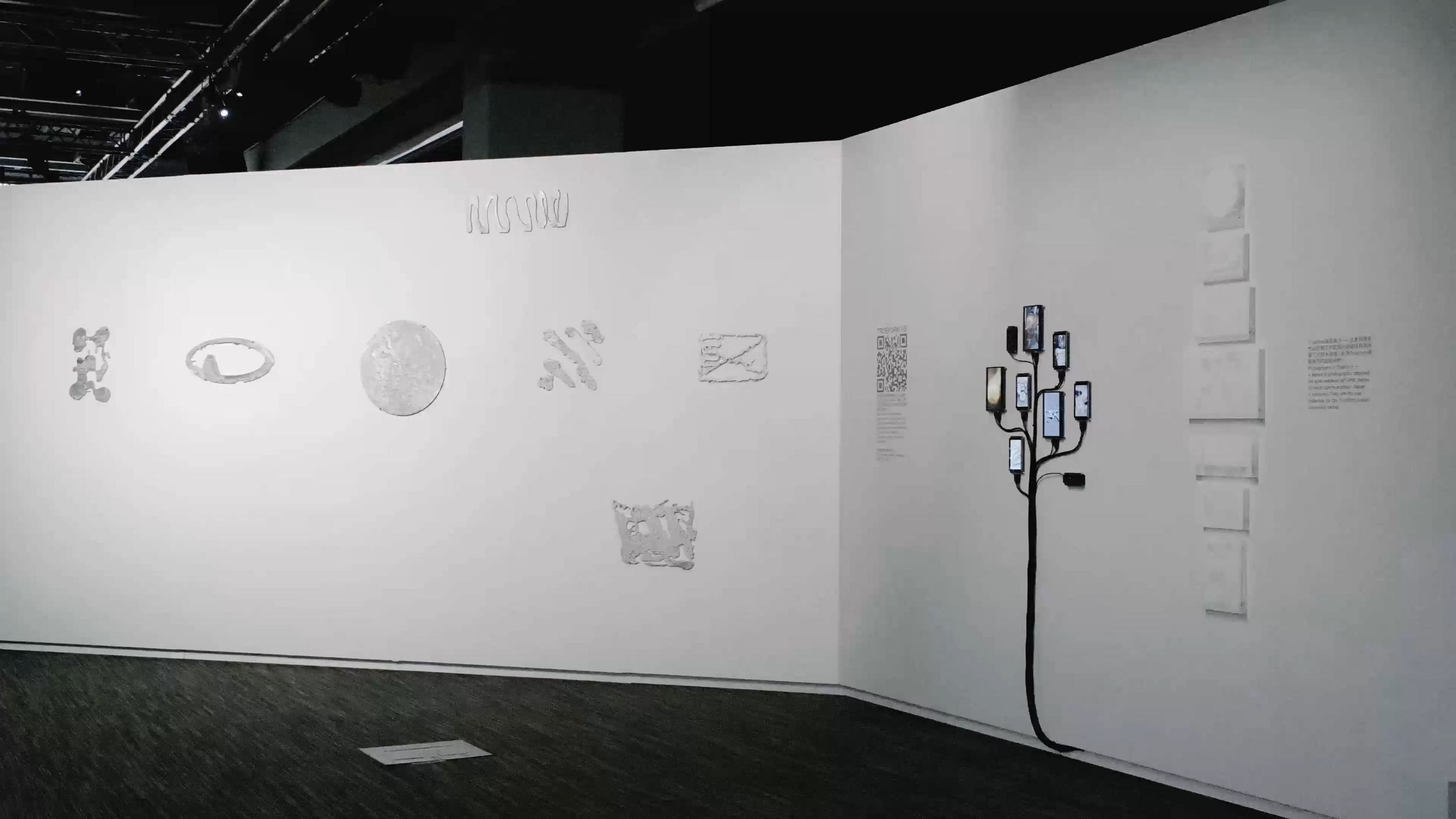
↑ Physical and virtual Trueforms navigate the tensions between ideals and reality, craft and technology, slow transformation and automated efficiency.

Alchemical mirror 


Aluminium embodies the logic of the crucible: transformation through force. Whether via heat or computation, raw input is refined into stable form. 


In this sense, aluminium becomes a contemporary alchemical medium. It is a vessel for knowledge that bridges the engineer’s precision with the maker’s intuition. By smelting neglected urban residues into this silver medium, we reveal an intrinsic structure through fire and code, using technology not just to replicate, but to transfigure. Aluminium serves as the concept for this shift, representing a world where the physical and the virtual are two different states of the same transformative energy. It is the mirror of a race that seeks to turn the raw data of its existence into a permanent sheen of innovation.
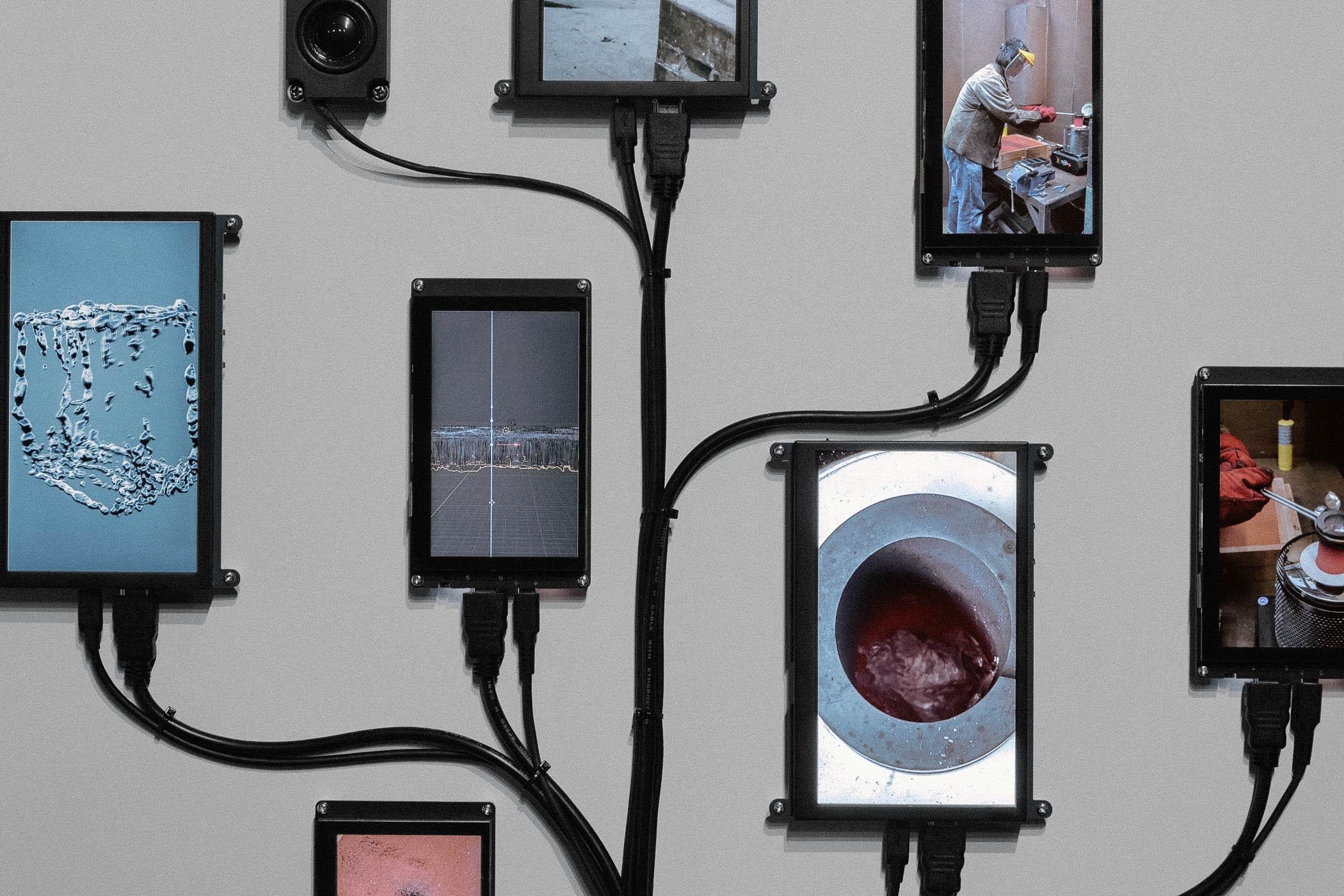

↑ The juxtaposition of metal casting and generative AI reveals two processes that are both mythical and technological in nature. 


words

Hamlet Auyeung leads Studio Nopqrst, a London practice at the intersection of culture and technology. The studio maintains a research-led practice where client-driven narratives and self-initiated explorations run in constant dialogue. Hamlet is also an Associate Partner at Pentagram London. His favourite colours reflect others.
Latest

Between light and shadow

The graphic language of Estevan Silveira

Finding tarps, colours & faces

A chat with Sabina Weiss, Product Design Lead at Freitag

Fire horses

Happy lunar new year

Look into the void

Studio Nopqrst finds trueforms in aluminium

January 14, 2026

Look into the void

on

↑ The physical transfiguration of urban residues into permanent, cast metal.

Studio Nopqrst finds trueforms in aluminium

The colour of steel and aluminium, alongside concrete, forms the raw palette of our industrial existence. These tones define the hardware interface: the cold, matte, or brushed surfaces of the tools we touch every day.


In Trueform, Studio Nopqrst founder Hamlet Auyeung reflects on this relationship between material and urban society. Aluminium casts and virtual sculptures expose the ghosts of graphic design — the dried out, stubborn glue residues left behind when signs, notices, or posters are torn away. Cast in aluminium, these overlooked traces are granted a permanence they never possessed, becoming metal through a deliberate act of material transformation.


↑ The traces of glue serve as the primary source image and prompt for the Trueform series.


Void to form


Metal casting and generative AI share a common logic: transformation through energy. 


In traditional sand casting, the process begins by crafting a ‘void’—a negative space created by moulding an object into the earth. Molten metal, liquified by extreme heat, is poured into that void, and a solid object emerges as it cools. In AI, images emerge from latent space — a mathematical void navigated through computational force.


Both processes represent a high-energy transition from a state of raw, unformed potential into a fixed manifestation of some self-asserting belief.


In Trueform, glue residues act as prompts for dual transformation. Physically, they become moulds for aluminium casts; digitally, they feed generative models that produce virtual sculptures. Aluminium’s ability to be endlessly melted and reformed mirrors this process. The work proposes a “liquid permanence,” where form is fixed yet always capable of revision, across both physical and virtual states.


Trueform AR: A web-based experience using physical casts to trigger virtual sculptures generated through Stable Diffusion.


Cold resistance


Aluminium has become the default aesthetic of high technology. From satellites to laptops, its silver surface signifies precision, neutrality, and authority. This association emerged through modernist design movements that favoured reduction and modularity.


The Landi Chair (1938), designed by Hans Coray, utilised a single sheet of heat-hardened aluminium, perforated with 91 holes to reduce weight. It marked an early political use of aluminium. Embodying Swiss democratic values through lightness and transparency, its avant-garde form stood as a distinctly modern, democratic response to the heavy, monumental, and traditionalist aesthetic favoured by Nazi Germany. It proved that aluminium could be both ethereal and a site of ideological resistance.


The Landi Chair (1938): A structural manifesto of "Spiritual National Defence," asserting Swiss democratic values against authoritarian traditionalism. Image from Moma.


This philosophy of material purity was later refined into a "Visual Language of Authority" by Dieter Rams, most notably in the World Receiver T1000 (1963). Rams and the Braun design team utilised anodised aluminium to establish a new "objective" aesthetic—one rooted in cold logic, transparency, and internationalism. By replacing the decorative, dark-wood cabinets of traditional radios with a laboratory-grade metallic fascia, the T1000 signalled that West Germany was now a rationalised, technocratic democracy.


World Receiver T1000 (1963): An objective interface designed to rehabilitate German industrial identity through cold, internationalist logic. Image from Brooklyn Museum.


This trajectory finds its contemporary conclusion in the unibody construction of the modern laptop. The MacBook Pro is the direct heir to the T1000’s logic; its chassis is milled from a solid block of aluminium to achieve a level of structural integrity and thermal efficiency. Here, the material is no longer just a "casing" but the very spine of the machine. The aluminium interface has become the ultimate signifier of digital authority—a cold, immutable boundary containing the chaotic, invisible heat of the processors within.


Hot mess


The journey from bauxite ore to a cast sculpture is a narrative of global movement and immense energy. Refining ore into metal requires temperatures exceeding 950°C and a massive flow of electricity—a process so intensive it is often referred to as ‘solid electricity.’ This represents a state in which the energy is solidified and forever locked through chemical transformation.


This process is increasingly geopolitical. China dominates approximately 60% of global aluminium production, largely powered by coal-fired electricity and captive power plants.


In the age of AI, which consumes vast amounts of electricity to ‘train’ its models, the choice of aluminium as a conceptual mirror in Trueform becomes more pointed. Casting urban residues into metal exposes the hidden infrastructure behind seamless digital experiences, turning discarded traces into witnesses of the carbon-intensive digital economy.


 An analogy exists between the craft of metal casting and the phenomenon of AI generative technology. Both are technologies of transformation driven by intense energy. 


Not so fast


Casting is a form of slow communication. Unlike digital images designed for rapid circulation and disposal, cast objects resist acceleration. By fixing glue traces—the remnants of commercial messaging—into aluminium, the work interrupts the cycle of consumption.


This gesture stands against ideologies that celebrate unchecked speed, such as Effective Accelerationism (e/acc), which advocates for the total submission to the machine’s velocity as a cosmic imperative.


Effective Accelerationism Flag: A flag design representing the belief in an utopia delivered through the rapid, unhindered expansion of capitalised AI.


To cast these traces in aluminium is to reclaim a sense of freedom from this relentless acceleration. It is a transition from the passivity of receiving temporary signals to the autonomy of creating fixed realities. Using AI in this process is a way to harness the speed of the machine to enhance the depth of the physical result, anchoring digital potential into a material reality that refuses to evaporate into a stream of infinite expansion.

off

↑ Physical and virtual Trueforms navigate the tensions between ideals and reality, craft and technology, slow transformation and automated efficiency.

Alchemical mirror 


Aluminium embodies the logic of the crucible: transformation through force. Whether via heat or computation, raw input is refined into stable form. 


In this sense, aluminium becomes a contemporary alchemical medium. It is a vessel for knowledge that bridges the engineer’s precision with the maker’s intuition. By smelting neglected urban residues into this silver medium, we reveal an intrinsic structure through fire and code, using technology not just to replicate, but to transfigure. Aluminium serves as the concept for this shift, representing a world where the physical and the virtual are two different states of the same transformative energy. It is the mirror of a race that seeks to turn the raw data of its existence into a permanent sheen of innovation.


↑ The juxtaposition of metal casting and generative AI reveals two processes that are both mythical and technological in nature. 


info

words

Hamlet Auyeung leads Studio Nopqrst, a London practice at the intersection of culture and technology. The studio maintains a research-led practice where client-driven narratives and self-initiated explorations run in constant dialogue. Hamlet is also an Associate Partner at Pentagram London. His favourite colours reflect others.
Latest

Between light and shadow

The graphic language of Estevan Silveira

Finding tarps, colours & faces

A chat with Sabina Weiss, Product Design Lead at Freitag

Fire horses

Happy lunar new year

January 14, 2026

Look into the void

on

Studio Nopqrst finds trueforms in aluminium

The colour of steel and aluminium, alongside concrete, forms the raw palette of our industrial existence. These tones define the hardware interface: the cold, matte, or brushed surfaces of the tools we touch every day.


In Trueform, Studio Nopqrst founder Hamlet Auyeung reflects on this relationship between material and urban society. Aluminium casts and virtual sculptures expose the ghosts of graphic design — the dried out, stubborn glue residues left behind when signs, notices, or posters are torn away. Cast in aluminium, these overlooked traces are granted a permanence they never possessed, becoming metal through a deliberate act of material transformation.


↑ The traces of glue serve as the primary source image and prompt for the Trueform series.


Void to form


Metal casting and generative AI share a common logic: transformation through energy. 


In traditional sand casting, the process begins by crafting a ‘void’—a negative space created by moulding an object into the earth. Molten metal, liquified by extreme heat, is poured into that void, and a solid object emerges as it cools. In AI, images emerge from latent space — a mathematical void navigated through computational force.


Both processes represent a high-energy transition from a state of raw, unformed potential into a fixed manifestation of some self-asserting belief.


In Trueform, glue residues act as prompts for dual transformation. Physically, they become moulds for aluminium casts; digitally, they feed generative models that produce virtual sculptures. Aluminium’s ability to be endlessly melted and reformed mirrors this process. The work proposes a “liquid permanence,” where form is fixed yet always capable of revision, across both physical and virtual states.


Trueform AR: A web-based experience using physical casts to trigger virtual sculptures generated through Stable Diffusion.


Cold resistance


Aluminium has become the default aesthetic of high technology. From satellites to laptops, its silver surface signifies precision, neutrality, and authority. This association emerged through modernist design movements that favoured reduction and modularity.


The Landi Chair (1938), designed by Hans Coray, utilised a single sheet of heat-hardened aluminium, perforated with 91 holes to reduce weight. It marked an early political use of aluminium. Embodying Swiss democratic values through lightness and transparency, its avant-garde form stood as a distinctly modern, democratic response to the heavy, monumental, and traditionalist aesthetic favoured by Nazi Germany. It proved that aluminium could be both ethereal and a site of ideological resistance.


The Landi Chair (1938): A structural manifesto of "Spiritual National Defence," asserting Swiss democratic values against authoritarian traditionalism. Image from Moma.


This philosophy of material purity was later refined into a "Visual Language of Authority" by Dieter Rams, most notably in the World Receiver T1000 (1963). Rams and the Braun design team utilised anodised aluminium to establish a new "objective" aesthetic—one rooted in cold logic, transparency, and internationalism. By replacing the decorative, dark-wood cabinets of traditional radios with a laboratory-grade metallic fascia, the T1000 signalled that West Germany was now a rationalised, technocratic democracy.


World Receiver T1000 (1963): An objective interface designed to rehabilitate German industrial identity through cold, internationalist logic. Image from Brooklyn Museum.


This trajectory finds its contemporary conclusion in the unibody construction of the modern laptop. The MacBook Pro is the direct heir to the T1000’s logic; its chassis is milled from a solid block of aluminium to achieve a level of structural integrity and thermal efficiency. Here, the material is no longer just a "casing" but the very spine of the machine. The aluminium interface has become the ultimate signifier of digital authority—a cold, immutable boundary containing the chaotic, invisible heat of the processors within.


Hot mess


The journey from bauxite ore to a cast sculpture is a narrative of global movement and immense energy. Refining ore into metal requires temperatures exceeding 950°C and a massive flow of electricity—a process so intensive it is often referred to as ‘solid electricity.’ This represents a state in which the energy is solidified and forever locked through chemical transformation.


This process is increasingly geopolitical. China dominates approximately 60% of global aluminium production, largely powered by coal-fired electricity and captive power plants.


In the age of AI, which consumes vast amounts of electricity to ‘train’ its models, the choice of aluminium as a conceptual mirror in Trueform becomes more pointed. Casting urban residues into metal exposes the hidden infrastructure behind seamless digital experiences, turning discarded traces into witnesses of the carbon-intensive digital economy.


 An analogy exists between the craft of metal casting and the phenomenon of AI generative technology. Both are technologies of transformation driven by intense energy. 


Not so fast


Casting is a form of slow communication. Unlike digital images designed for rapid circulation and disposal, cast objects resist acceleration. By fixing glue traces—the remnants of commercial messaging—into aluminium, the work interrupts the cycle of consumption.


This gesture stands against ideologies that celebrate unchecked speed, such as Effective Accelerationism (e/acc), which advocates for the total submission to the machine’s velocity as a cosmic imperative.


Effective Accelerationism Flag: A flag design representing the belief in an utopia delivered through the rapid, unhindered expansion of capitalised AI.


To cast these traces in aluminium is to reclaim a sense of freedom from this relentless acceleration. It is a transition from the passivity of receiving temporary signals to the autonomy of creating fixed realities. Using AI in this process is a way to harness the speed of the machine to enhance the depth of the physical result, anchoring digital potential into a material reality that refuses to evaporate into a stream of infinite expansion.

↑ The physical transfiguration of urban residues into permanent, cast metal.

off

Alchemical mirror 


Aluminium embodies the logic of the crucible: transformation through force. Whether via heat or computation, raw input is refined into stable form. 


In this sense, aluminium becomes a contemporary alchemical medium. It is a vessel for knowledge that bridges the engineer’s precision with the maker’s intuition. By smelting neglected urban residues into this silver medium, we reveal an intrinsic structure through fire and code, using technology not just to replicate, but to transfigure. Aluminium serves as the concept for this shift, representing a world where the physical and the virtual are two different states of the same transformative energy. It is the mirror of a race that seeks to turn the raw data of its existence into a permanent sheen of innovation.


↑ The juxtaposition of metal casting and generative AI reveals two processes that are both mythical and technological in nature. 


↑ Physical and virtual Trueforms navigate the tensions between ideals and reality, craft and technology, slow transformation and automated efficiency.

info

words

Hamlet Auyeung leads Studio Nopqrst, a London practice at the intersection of culture and technology. The studio maintains a research-led practice where client-driven narratives and self-initiated explorations run in constant dialogue. Hamlet is also an Associate Partner at Pentagram London. His favourite colours reflect others.
Latest

Between light and shadow

The graphic language of Estevan Silveira

Finding tarps, colours & faces

A chat with Sabina Weiss, Product Design Lead at Freitag

Fire horses

Happy lunar new year

Look into the void

Studio Nopqrst finds trueforms in aluminium
